
Machinery insurance and machinery casco insurance
Protecting industrial and professional machinery with “machinery insurance” and “machinery casco” policies in Switzerland. This article explains the advantages, the risks covered, the supplementary cover and the key clauses for choosing the policy best suited to your company’s needs.
Why it is important to insure your company’s machinery
- Protection of the capital invested in machinery: A fixed annual premium turns potentially unpredictable costs (damage, breakdowns, accidents) into a plannable expense.
- Business continuity: Unexpected machine downtime can cause considerable losses in productivity and turnover. An appropriate policy (possibly with business interruption cover) safeguards production capacity.
- Extended insurance cover: extended cover against technical hazards, human error and, where applicable, fire and natural hazards.
- To extend the cover of commercial insurance for individual machines selected at your discretion
Machinery insurance
Machinery insurance is one of the so-called “technical insurances”. It is designed to cover industrial or professional machinery, whether stationary or mobile, against a potentially very wide range of risks, which may include both “external” events (external force) and “internal” events (operational damage).
Main features
Subject of cover
- Machinery that is installed and ready for use, often stationary or difficult to transport (e.g. industrial plant, medical equipment, processing robots, etc.).
- May also include mobile machines (e.g. construction site excavators), CNC machine tools, printing presses and measuring instruments, if specified in the policy.
Insured risks
External force (“accident”):
- collision
- overturning
- violent impacts
- landslides, rockfall
- short circuits and overcurrent/overvoltage caused by phenomena external to the machine
- subsidence of the ground or terrain
Internal operational damage (“illness”):
- handling errors, negligence, incompetence
- short circuit, overcurrent/overvoltage internal to the machine
- overloading
- failure of measuring, control or safety devices
Supplementary cover
- Fire, natural hazards and theft
- Clearance costs
- Business interruption and/or additional costs: to cover expenses and loss of income due to machine downtime
- Current value, increased market value: in the event of a total loss, compensation may vary depending on the insurance company’s clauses
Determining compensation in the event of a claim
Partial loss: reimbursement of the costs incurred to restore the condition prior to the loss. Repair costs, up to a maximum of the current value.
Total loss: repair costs exceeding the current value; payment of the current value or of an increased market value, depending on the insurance contract taken out.
Machinery casco insurance
Machinery casco cover is also a technical insurance, but it focuses mainly on mobile and self-propelled work machines, often used in high-risk settings (construction sites, farms, municipal services, etc.). Specifically, it covers damage caused by external force.
Insured risks
External force (“accident”): collisions, overturning, short circuits due to external factors, landslides, rockfall, ground subsidence and damage caused by improper handling.
Supplementary cover
- Fire, natural hazards and theft
- Additional clearance costs
- Business interruption and/or additional costs: to cover expenses and loss of income due to machine downtime
- Current value, increased market value: in the event of a total loss, compensation may vary depending on the insurance company’s clauses
Advantages and considerations for companies
Tailored protection: each machine or installation may require specific cover, depending on the sector (construction, agriculture, industry, logistics).
Credit protection: these policies are often required for leasing or financing; they protect both the company and the interests of suppliers and lenders.
Simplified claims handling: damage is covered regardless of liability (if the event is among those insured), reducing disputes and downtime.
Premium optimisation: an analysis of the company’s risks and needs makes it possible to avoid unnecessary costs by tailoring the cover in a targeted way.
Points to assess
Exclusions: wear and tear, corrosion, poor maintenance and the manufacturer’s warranty obligations are not covered. The policy does not replace legal liability or factory warranties.
Territorial scope: machinery casco is generally valid in Switzerland and Liechtenstein. For work abroad, a specific geographical extension is required.
How to optimise your choice of cover: 5 practical tips
Analysis of the machinery fleet: identifying the type, value and frequency of use of each machine.
Assessment of risk exposure: considering the operating contexts (construction sites, industrial environments, seasonal activities, work abroad).
Choosing the best formula (or combination of policies): assessing whether the basic form of machinery casco is sufficient or whether machinery insurance should also be included to cover internal damage.
Customising the policy: fire, theft, business interruption and new replacement value, etc. are some of the possible additional covers.
Relying on a specialist advisor: to obtain appropriate contractual terms and a tailor-made offer.
Conclusions
“Machinery insurance” and “machinery casco” policies are strategic tools for Swiss companies wishing to protect their investments in machinery and equipment, ensuring business continuity and financial stability.
In summary:
- Check your specific needs (material damage, business interruption, fire, theft)
- Correctly define the sum insured (current value or new replacement value)
- Plan regular maintenance, thereby reducing exclusions linked to wear and tear or negligence
With the support of an experienced insurance advisor, it is possible to define a personalised package of cover, with optimally calculated premiums and integrated cover for all the most critical risks, in line with insurance legislation and practice in Switzerland.
Article written by:
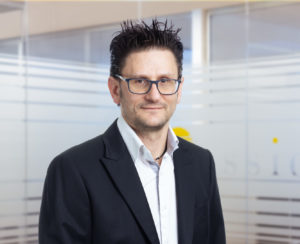
Ivano Piffaretti
Member of Middle Management
Head of the Property/Financial Loss Insurance Team